
Keratoconus Care at Lifeline Eye Centre
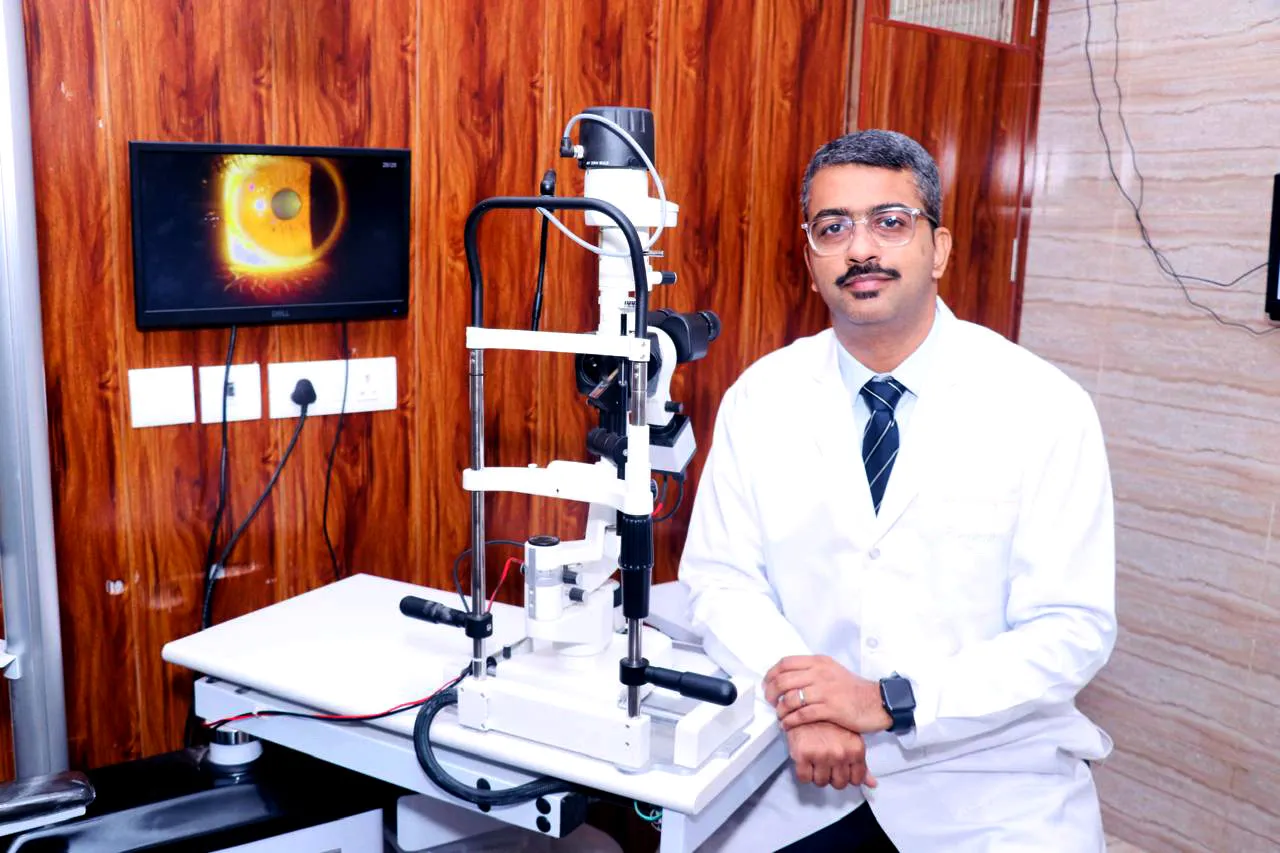
Keratoconus is a progressive thinning and bulging of the cornea that usually starts in the teens or twenties. Caught early, corneal collagen cross-linking (C3R) can halt it. At Lifeline Eye Centre, Dr. Javed H. Farooqui, a dual fellowship-trained cornea specialist, tracks your cornea closely and treats it at the right stage, from cross-linking to DALK when needed.
15+ Yrs
Surgeon Experience
Dual
Cornea Fellowships (India & Australia)
Early
Detection Through Corneal Mapping
In-House
OT, Pharmacy & Optical
In keratoconus the cornea gradually weakens and bulges into a cone shape. This causes blurred, distorted vision, frequent changes in spectacle number, light sensitivity and ghosting of images. Rubbing the eyes hard and ongoing allergy are widely recognised as aggravating factors, so controlling them is part of treatment.
The goal of treatment depends on the stage. In early, progressing keratoconus, corneal collagen cross-linking strengthens the cornea to stop it getting worse. It stabilises the cornea rather than reversing the damage, which is why timing matters. Vision can then be improved with glasses or specialised contact lenses. In advanced keratoconus with scarring, a partial-thickness transplant such as DALK may be needed.
Because Dr. Farooqui is a cornea surgeon, you will not be pushed toward transplant when cross-linking is enough, nor delayed when the cornea has gone beyond it. Your mapping, treatment and follow-up all happen with the same surgeon at Lifeline Eye Centre, Laxmi Nagar.
🔴 Spectacle number, especially astigmatism, changing every few months
🔴 Blurred or distorted vision that glasses cannot fully correct
🔴 Ghosting, streaks or multiple images, especially at night
🔴 Increased glare and sensitivity to light
🔴 A habit of frequent or forceful eye rubbing
🔴 Family history of keratoconus, or told you are 'not suitable for LASIK'
Keratoconus is managed best when it is staged and tracked properly. Here's how Lifeline compares with the other options in Delhi NCR.
Who Manages Your Care
LIFELINE EYE CENTRE
Cornea fellowship-trained surgeon, same doctor throughout
CORPORATE EYE CHAINS
Varies by centre and roster
GENERAL HOSPITAL EYE OPD
Usually a general ophthalmologist
Treatments Offered
LIFELINE EYE CENTRE
Corneal mapping, cross-linking (C3R), DALK and PK for advanced cases
CORPORATE EYE CHAINS
Cross-linking usually available
GENERAL HOSPITAL EYE OPD
Often glasses advice only until advanced
Cost & Clarity
LIFELINE EYE CENTRE
Itemised estimate before treatment; TPA and insurance accepted
CORPORATE EYE CHAINS
Package-led pricing
GENERAL HOSPITAL EYE OPD
Lower cost, longer waiting lists
Best Suited For
LIFELINE EYE CENTRE
Early detection, progressing keratoconus and advanced disease needing a graft
CORPORATE EYE CHAINS
High-volume elective procedures
GENERAL HOSPITAL EYE OPD
Routine eye care and emergencies
If you have been told you need a cornea transplant for keratoconus, a second opinion is worth taking. Many eyes can be stabilised with cross-linking, or need only a partial-thickness graft.
🗺️
Corneal Topography
Maps the shape of the cornea to detect keratoconus early and track whether it is progressing.
📏
Corneal Thickness Mapping
Measures thinning across the cornea, which guides whether cross-linking is safe and effective.
🔗
Collagen Cross-Linking (C3R)
Uses riboflavin drops and UV light to strengthen corneal collagen and halt progression.
👓
Vision Correction Advice
Guidance on spectacles and contact lens options to make the best use of your remaining vision.
🪶
DALK
Replaces only the front layers of the cornea in advanced keratoconus, keeping your own inner layer.
👁️
Penetrating Keratoplasty (PK)
Full-thickness transplant for selected advanced cases, including deep scarring.
💧
Allergy & Eye-Rubbing Control
Treating itching and allergy, and counselling to reduce rubbing that can speed progression.
🩺
Long-Term Monitoring
Regular scans to catch change early, especially in children, teenagers and young adults.
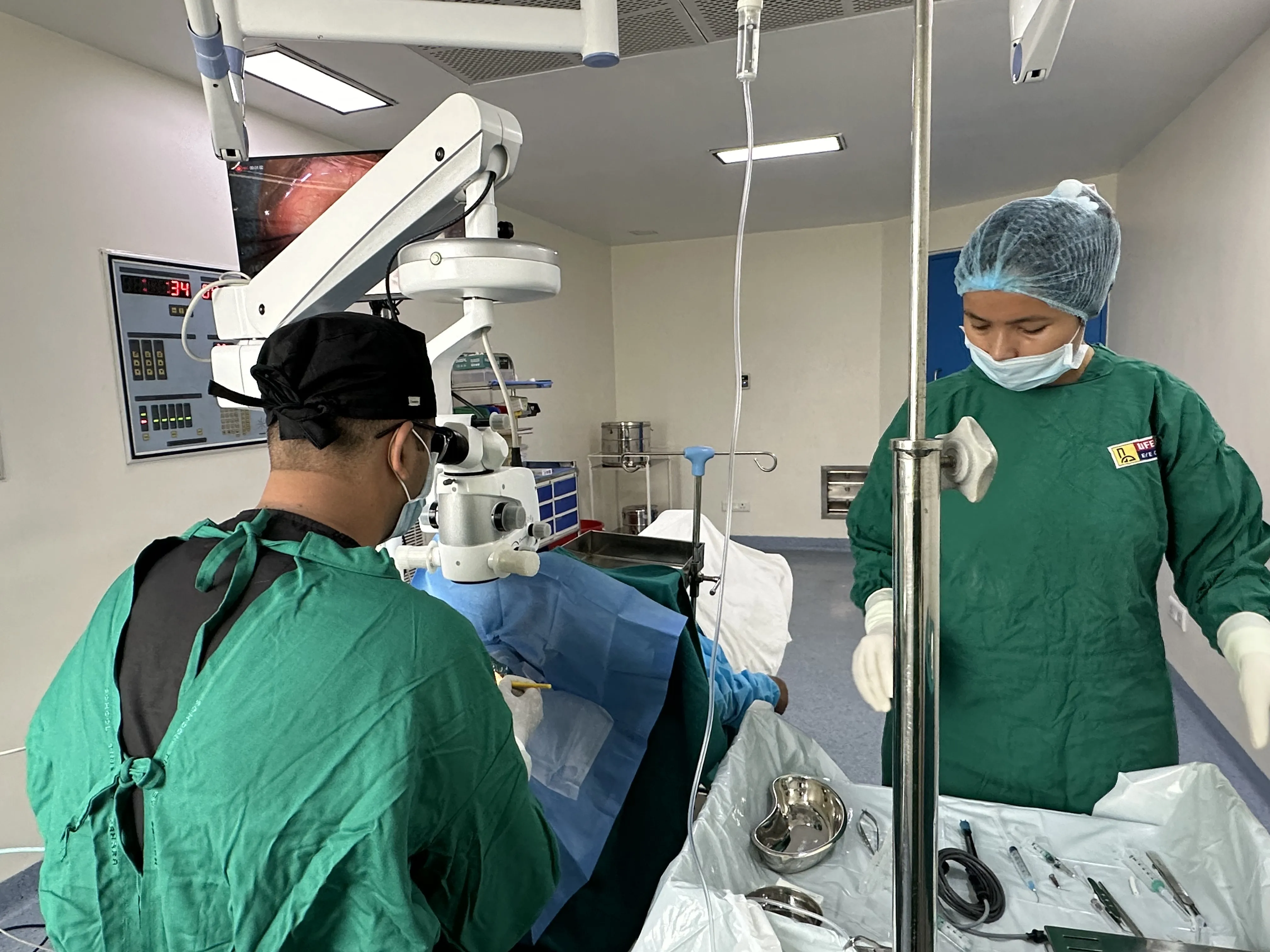
Keratoconus is a long-term condition, and the right moment to intervene is shown by comparing scans over time. At Lifeline, the surgeon who reads your corneal maps is the one who treats you and follows you afterwards.
✓ Corneal mapping compared over time, not a single scan
✓ Honest advice on cross-linking versus surgery
✓ Follow-up scans through and after treatment
Map
Corneal topography and thickness mapping to confirm the diagnosis and stage.
Decide
Observe, cross-link or plan a graft. You get a clear estimate and TPA or insurance support.
Treat
Cross-linking or surgery in our in-house OT, usually under local or topical anaesthesia.
Recover & Monitor
Drops, protective care and follow-up scans to confirm the cornea has stabilised.

A single scan shows the shape of your cornea today. Repeat scans show whether it is getting worse, and that is what decides if cross-linking is needed. Careful tracking is what lets many patients avoid a transplant.
👨⚕️
Cornea-Trained Surgeon
🏥
In-House OT, Pharmacy & Optical
💳
Cashless TPA & Insurance
📍
Easy Access in East Delhi
★★★★★
My son's number kept changing. The scans finally showed why, and the treatment stopped it getting worse.
— Sample Patient A.
★★★★★
I was told I would need a transplant elsewhere. Here the doctor explained why that was not needed yet.
— Sample Patient B.
★★★★★
Every scan and decision was explained clearly, and the costs were told upfront.
— Sample Patient C.
Laxmi Nagar
Preet Vihar
Shakarpur
Patparganj
Mayur Vihar
Anand Vihar
Karkardooma
Vaishali & Indirapuram
Bring your previous glasses prescriptions and any earlier corneal scans, since comparing them helps show whether your cornea is changing. You'll leave knowing your stage and your options.
Q1. What is keratoconus?
It is a condition in which the cornea thins and bulges into a cone shape, causing distorted vision and changing spectacle numbers. It often begins in the teens or twenties.
Q2. What causes keratoconus?
The exact cause is not fully understood. Genetics, ongoing allergy and frequent eye rubbing are associated with it, so controlling itching and rubbing is advised.
Q3. Can keratoconus be cured?
It cannot be cured, but its progression can often be stopped with corneal cross-linking. Cross-linking stabilises the cornea rather than restoring it to normal.
Q4. What is corneal cross-linking (C3R)?
Riboflavin (vitamin B2) drops and controlled UV light are used to strengthen the cornea's collagen. Your surgeon will explain suitability, including corneal thickness, after mapping.
Q5. Is cross-linking painful? What is recovery like?
The eye is numbed during the procedure. Discomfort, watering and light sensitivity are common for a few days afterwards and are managed with medication. Vision may take a few weeks to settle.
Q6. Will I still need glasses or contact lenses?
Often yes. Cross-linking aims to stop progression, not to remove the need for correction. Glasses or specialised contact lenses may be advised to optimise vision.
Q7. When is a cornea transplant needed?
When the cornea is too scarred or too irregular for glasses or lenses to give useful vision. Partial-thickness DALK is commonly used for keratoconus where suitable.
Q8. Is keratoconus treatment covered by insurance?
Cover varies by policy and procedure, and cross-linking is sometimes treated differently from transplant surgery. Our team will check your policy and give a clear estimate beforehand.
Q9. How do I book a consultation at Lifeline Eye Centre?
Book online using the appointment button on this page, call 9599444445, or visit us at A-13, Patparganj Road, Priyadarshini Vihar, Laxmi Nagar, Delhi 110092. Please carry any previous eye reports and prescriptions with you.